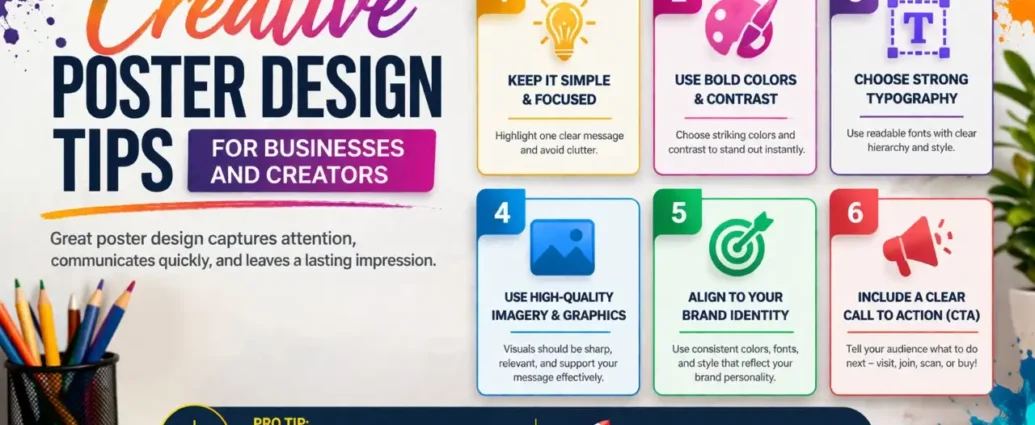
In a crowded digital landscape, grabbing attention is harder than ever. Whether you’re promoting a product, announcing an event, or building brand awareness, posters remain one of the most effective visual marketing tools. The key, however, lies in creativity. A generic poster won’t cut it,you need something that stops people mid-scroll or mid-step.
The good news? You don’t need to be a professional designer to create something impactful. With modern tools and resources, creating your free printable poster templates has never been easier, allowing businesses and creators to produce high-quality designs without breaking the bank.
In fact, research shows that visual content increases engagement by up to 94%, proving just how powerful well-designed graphics can be. So, how do you create posters that truly stand out?
Let’s explore creative, practical tips that will elevate your poster design game.
Why Poster Design Still Matters
Posters are more than just visuals,they’re communication tools.
Instant Impact
A well-designed poster delivers your message in seconds, making it ideal for fast-paced environments.
Versatility
Posters work everywhere:
- Social media
- Events
- Retail spaces
- Websites
Cost-Effective Marketing
Compared to video or large ad campaigns, posters are affordable and scalable.
1. Start with a Clear Purpose
Before opening any design tool, define your goal.
Ask yourself:
- What action do I want people to take?
- Who is my target audience?
- Where will this poster be displayed?
Clarity at this stage ensures your design stays focused and effective.
2. Make Your Headline Impossible to Ignore
Your headline is your hook.
It should be:
- Short
- Bold
- Benefit-driven
Examples:
- “Don’t Miss This Sale!”
- “Transform Your Business Today”
Use powerful words that create curiosity or urgency.
3. Use Visual Hierarchy to Guide the Eye
Good design leads the viewer naturally.
Structure your poster like this:
- Headline (largest)
- Image or visual (center focus)
- Supporting text
- Call-to-action (CTA)
This ensures your message is easy to understand at a glance.
4. Choose Colors Strategically
Colors influence emotions and decisions.
- Red – urgency, excitement
- Blue – trust, reliability
- Yellow – energy, attention
- Black – luxury, sophistication
Stick to 2–3 main colors to avoid overwhelming the viewer.
5. Use High-Quality Images
Low-quality visuals can ruin even the best design.
Best practices:
- Use high-resolution images
- Avoid pixelation
- Choose visuals that align with your message
Studies show that content with strong visuals gets significantly higher engagement.
6. Keep It Simple and Clean
Less is more when it comes to posters.
Avoid:
- Too much text
- Too many colors
- Cluttered layouts
A clean design improves readability and makes your message more impactful.
7. Experiment with Creative Layouts
Don’t be afraid to break the grid.
Creative ideas:
- Diagonal text placement
- Overlapping elements
- Asymmetrical layouts
Unique layouts can make your poster stand out instantly.
8. Add a Strong Call-to-Action (CTA)
Your poster should inspire action.
Examples:
- “Shop Now”
- “Register Today”
- “Learn More”
Make your CTA clear, visible, and compelling.
9. Use Typography to Your Advantage
Fonts communicate personality.
Tips:
- Use bold fonts for headlines
- Pair fonts carefully (max 2–3 styles)
- Ensure readability from a distance
Avoid overly decorative fonts that reduce clarity.
10. Incorporate Branding Elements
Consistency builds trust.
Include:
- Your logo
- Brand colors
- Consistent style
Branded posters make your business more recognizable.
11. Design for Both Print and Digital
Your poster should work everywhere.
Print Design Tips
- Use 300 DPI resolution
- Choose CMYK color mode
Digital Design Tips
- Optimize for screen sizes
- Use RGB color mode
Adapt your design for platforms like Instagram, Facebook, and websites.
12. Leverage White Space
White space (empty space) is your friend.
It:
- Improves readability
- Highlights key elements
- Makes your design look modern
Don’t try to fill every inch of your poster.
13. Test Different Versions
Great design often comes from testing.
Try:
- Different headlines
- Alternate colors
- Multiple layouts
Small changes can lead to big improvements in engagement.
14. Add Interactive Elements
Make your posters more engaging by including:
- QR codes
- Social media handles
- Website links
This bridges offline and online interaction.
15. Stay Consistent but Innovative
Consistency builds recognition,but creativity keeps things fresh.
Balance:
- Brand guidelines
- New design ideas
This keeps your audience interested while maintaining trust.
Common Mistakes to Avoid
Overloading Information
Too much content overwhelms viewers.
Poor Contrast
Low contrast makes text hard to read.
Weak Visuals
Blurry or irrelevant images reduce credibility.
No Clear Focus
A poster without a focal point confuses viewers.
Real-World Use Cases
Event Promotions
Use bold visuals and dynamic layouts to create excitement.
Sales Campaigns
Highlight discounts and urgency with strong typography.
Product Launches
Make the product the hero of your design.
Personal Branding
Creators can use posters to promote content, services, or collaborations.
Tools to Create Stunning Posters
You don’t need advanced skills to design like a pro.
Popular tools:
- Canva
- Adobe Express
- VistaCreate
These platforms offer:
- Drag-and-drop editors
- Pre-designed templates
- Customization options
Perfect for beginners and professionals alike.
Final Thoughts
Creative poster design is about more than just aesthetics,it’s about communication, strategy, and impact. When done right, a poster can capture attention, deliver your message instantly, and drive real results.
Focus on:
- Strong headlines
- Clean layouts
- High-quality visuals
- Clear CTAs
And most importantly,don’t be afraid to experiment.
With the right approach, your posters can become powerful marketing tools that elevate your brand and engage your audience effectively.
For more informative articles, visit our site daily.
Regards