
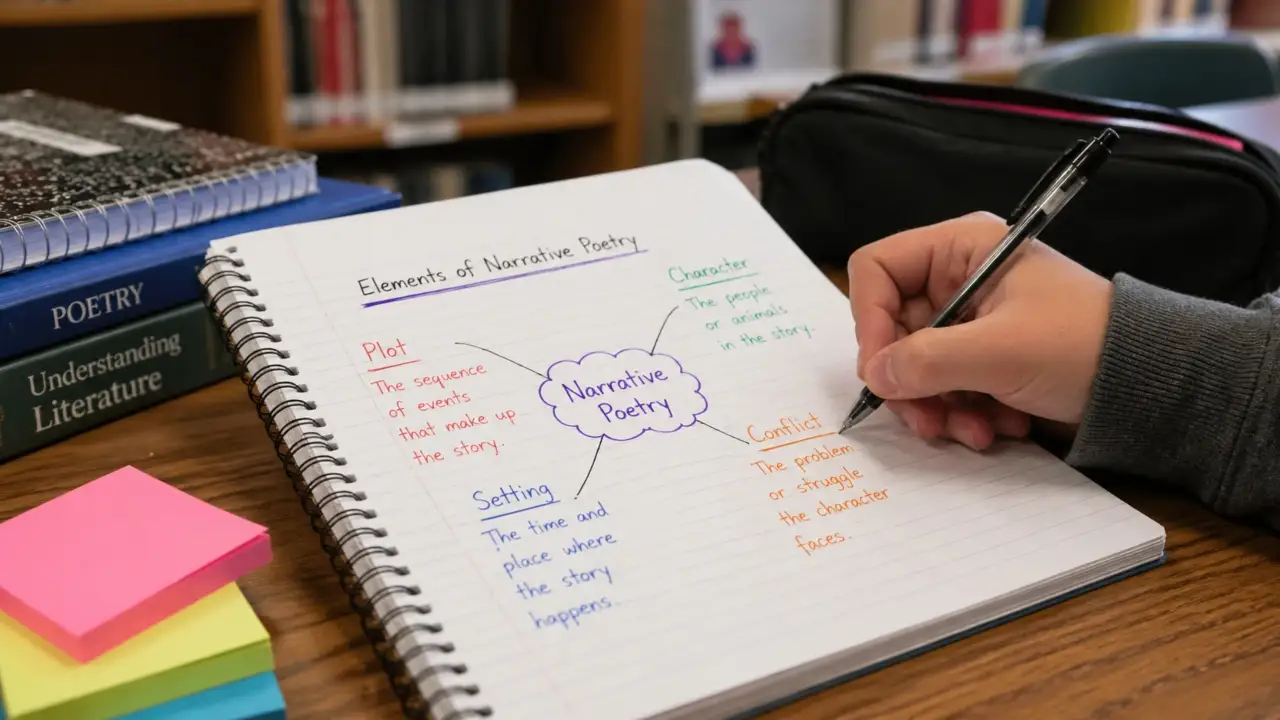
Narrative poetry is one of the most accessible yet analytically rich forms of literature students encounter in school. It combines storytelling with poetic structure, creating a hybrid form that is both expressive and organized. A frequently asked academic question based on the poem “The Thing about Terry” is:
Which elements of narrative poetry are reflected in “The Thing about Terry”? Select 4 options
The correct answer—based on standard literary analysis and classroom interpretation—is:
Rhyme, Rhythm, Setting, and Stanzas
However, to truly understand why these four are correct, it’s important to go beyond memorization and explore how narrative poetry works in real literary practice.
This article breaks down each element in depth, explains its function in the poem, and helps you understand how to confidently answer similar exam questions.
Understanding Narrative Poetry in Simple Terms
Narrative poetry is a type of poetry that tells a story. Unlike lyric poetry, which focuses on emotions and personal feelings, narrative poetry focuses on events, characters, and plot development.
Think of it as storytelling in poetic form.
A narrative poem typically includes:
- A clear storyline (beginning, middle, and end)
- Characters who perform actions
- A defined setting
- A structured poetic form (stanzas, rhyme, rhythm)
This structure is what makes poems like “The Thing about Terry” ideal for classroom analysis—they are simple enough to follow but structured enough to test literary understanding.
Why “The Thing about Terry” Is Used in Exams
Teachers and exam boards often use poems like this because they test multiple skills at once:
- Reading comprehension
- Literary analysis
- Identification of poetic devices
- Understanding structure vs content
Instead of focusing only on meaning, students are asked to recognize how the poem is built, not just what it says.
That is where narrative poetry elements become important.
Correct Answer Overview
In most academic contexts, the four correct narrative poetry elements reflected in “The Thing about Terry” are:
- Rhyme
- Rhythm
- Setting
- Stanzas
Let’s explore each one in detail.
1. Rhyme – The Sound Structure of the Poem
Rhyme is one of the most recognizable poetic devices. It occurs when words at the end of lines have similar sounds, such as cat/hat or time/rhyme.
How rhyme works in narrative poetry
In narrative poems, rhyme is not just decorative—it serves several important functions:
- It makes the poem easier to read aloud
- It improves memorability
- It creates a musical flow
- It helps connect ideas across lines
In “The Thing about Terry,” rhyme helps maintain a smooth storytelling rhythm, making the narrative more engaging for readers.
Why it matters in exams
Students often underestimate rhyme because it feels simple. However, in structured poetry analysis, rhyme is one of the strongest indicators that a poem is narrative rather than free verse.
2. Rhythm – The Beat of the Story
Rhythm refers to the pattern of stressed and unstressed syllables in a line of poetry. It is often described as the “beat” of the poem.
Role of rhythm in storytelling
In narrative poetry, rhythm serves a storytelling function:
- It controls pacing (fast or slow movement of events)
- It adds emotional emphasis to key moments
- It makes reading more expressive and dynamic
In “The Thing about Terry,” rhythm helps guide the reader through the sequence of events, making the story feel natural and flowing.
Real-world comparison
Think of rhythm like background music in a film. Even if you don’t consciously notice it, it shapes how you experience the story.
3. Setting – The Foundation of the Narrative
Setting refers to the time and place in which the story occurs.
Why setting is essential in narrative poetry
Without a setting, a narrative poem would feel incomplete. It provides:
- Context for the events
- A visual framework for imagination
- Emotional grounding for characters
In “The Thing about Terry,” the setting helps readers understand where the events are happening and why they matter.
Literary importance
Setting also influences tone. For example:
- A school setting may feel familiar and relatable
- A mysterious setting may create tension
- A domestic setting may feel personal and emotional
Even when the poem does not explicitly describe every detail, the implied setting is still a key part of narrative structure.
4. Stanzas – The Structural Organization
A stanza is a grouped set of lines in a poem, similar to a paragraph in prose.
Why stanzas matter in narrative poetry
Stanzas serve as structural building blocks:
- They divide the story into sections
- They organize ideas logically
- They signal shifts in events or tone
- They improve readability
In “The Thing about Terry,” stanzas help break the narrative into manageable parts, making it easier to follow the progression of the story.
Example of function
One stanza might introduce the character, while another shows an event, and a third resolves the situation. This structure mirrors storytelling in prose but remains poetic in form.
Why Other Options Are Incorrect
Students often get confused because multiple poetic elements exist. However, not all apply here.
Imagery
While imagery may appear, it is not the defining structural feature tested in this question.
Metaphor or simile
These are figurative language tools, not structural elements of narrative poetry.
Free verse
This poem is structured, not free verse, so this option is incorrect.
The question specifically targets structural elements, not language techniques.
How These Four Elements Work Together
What makes “The Thing about Terry” a narrative poem is not just one element—it’s the combination of all four.
How they interact:
- Rhyme gives sound structure
- Rhythm gives flow and pace
- Setting gives context
- Stanzas give organization
Together, they transform simple storytelling into a poetic experience.
This combination is what educators want students to recognize.
Exam Strategy: How to Answer Similar Questions
When facing similar MCQs or short-answer questions, use this method:
Step 1: Identify structure vs language
Ask: “Is this about how the poem is built or what it says?”
Step 2: Focus on storytelling features
Narrative poetry usually emphasizes:
- structure
- sequence of events
- sound patterns
Step 3: Eliminate distractions
Remove:
- emotional-only devices
- figurative language
- unrelated poetic terms
This approach significantly improves accuracy in exams.
Educational Importance of This Topic
Understanding narrative poetry is not just for exams—it builds foundational literary skills:
- Critical thinking
- Text analysis
- Pattern recognition
- Interpretation of structure
According to educational research in literature studies, students who understand poetic structure perform better in reading comprehension tasks because they can break down complex texts more effectively.
Final Answer (For Quick Revision)
The correct four elements of narrative poetry reflected in “The Thing about Terry” are:
- Rhyme
- Rhythm
- Setting
- Stanzas
Final Thoughts
The key to mastering questions like “Which Elements of Narrative Poetry Are Reflected in “The Thing about Terry”? Select 4 Options?” is not memorization alone—it’s understanding structure.
Once you recognize how rhyme, rhythm, setting, and stanzas work together, you can confidently analyze any narrative poem, even unfamiliar ones.